There is no doubt that mass forms of media have a massive influence on society and society’s opinions around sport and its players. Specifically, it enabled people to tune into sporting events that were happening across the world. But the question is has it done more good than bad? To understand this, critical analysis of sport media’s effects on society have to be performed.
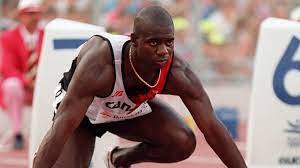
Historically, we know that the role of the media certainly helped sport to be broadcasted around the world with the ‘Battle of the sexes’ tennis match in 1973. According to Billie Jean King Enterprises. (2017), the Billie Jean King tennis match was publicized via television and radio, collecting around 90 million viewers worldwide. In 1973 to have these viewership numbers was critical to influence mass groups of people. This has a positive impact on societies around the world as it brings people together. Additionally, we know that sport can influence societies opinions on players. We see this in Jackson, S. J., & Ponic, P. (2001), when Wayne Gretsky was traded to the Los Angeles Kings, Canada’s media outlets like the Edmonton Journal, Sports Illustrated and the Vancouver Sun wrote headlines relating to Gretskys trade as ideas of ‘loss’, ‘sadness’ and ‘betrayal’. Additionally, Canadian society named the day of the trade (August 9th 1998) as ‘Black Tuesday’. As much as this seemed to have impacted Gretsky and Canada negatively in the short term, like most things, we tend to get over it. Canada still sees Gretsky as not only the best hockey player of all time, but also the best Canadian hockey player of all time and a staple of Canadian culture. Ben Johnson, on the other hand, was not forgiven for his actions. Once again we can see how the media can influence society’s opinion on sport and its players. In the 1988 Olympic games, Ben Johnson competed in the 100m race and won. However 3 days after the race he tested positive for steroid use and was disqualified for his actions, Jackson, S. J., & Ponic, P. (2001). This is the negative impact of the media’s influence on society’s opinions on players. When the news broke, Ben Johnson faced massive accounts of racism and hatred and was banned from Olympic attendance in 1993 after another positive test for steroids.
 Sociology in the Olympics